

How AI Can Transform Small and Mid-Size Retail with Robotics and Automation

Small and mid-size retailers rarely lose customers because of one dramatic failure. More often, the damage comes from small daily frictions: empty shelves, slow checkouts, messy stockrooms, missed reorders, staff running from task to task, and owners making decisions with partial information. AI can help remove those frictions by turning store data into better timing, better visibility, and better use of people’s time. When paired with robotics and automation, AI moves from being a back-office tool to something that can support the store floor, the warehouse area, and the customer experience. This matters because smaller retailers do not have endless labor hours or giant technology budgets. The right tools can help them act more like larger chains without losing the local service and product knowledge that make them valuable.

AI gives retailers a clearer view of inventory
Inventory is one of the best starting points because it affects nearly every part of retail. A small store may know what its point-of-sale system says, but that does not always match what is actually on the shelf, in the stockroom, or misplaced in the wrong aisle. AI can compare sales patterns, shelf scans, supplier lead times, seasonal shifts, and local buying habits to flag likely stockouts before they happen. Instead of waiting for a customer to ask why an item is missing, the system can suggest a reorder or alert staff that a shelf needs attention. For small retailers, this is not about replacing judgment. It is about giving owners and managers a second set of eyes that never gets tired and can spot patterns faster than a person reviewing spreadsheets at the end of a long day.
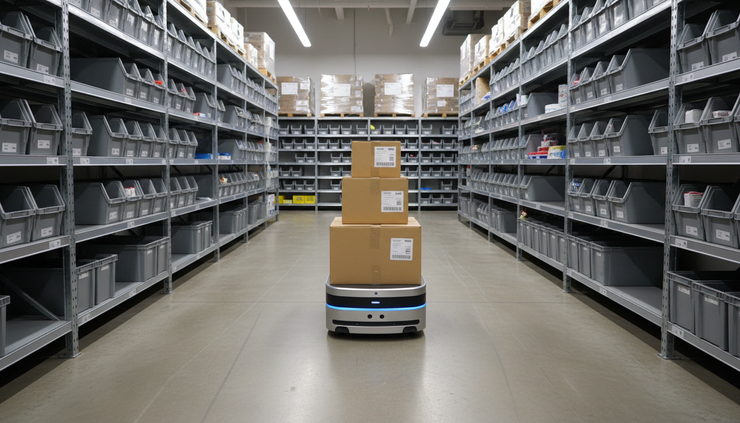
Robotics can make that inventory data much stronger. A shelf-scanning robot can move through aisles before opening, after closing, or during slower hours, checking labels, gaps, and product placement. In a stockroom, a small autonomous cart can help move bins or bring items closer to packing stations. Even simple computer vision tools, such as fixed cameras that read shelf conditions, can reduce the number of manual checks staff need to perform. For the phrase robotics, SMB, retail to become useful in practice, the technology must solve a real store problem, not create a new one. The best use case is usually narrow and practical: find missing items, reduce time spent counting, improve replenishment, or help employees locate products faster.

Automation can reduce repetitive store work
Many retail tasks are necessary but repetitive. Staff walk aisles to check shelf gaps, count backstock, print labels, update prices, sort returns, move boxes, and answer the same basic product questions. AI and automation can help by handling the predictable parts of that work. For example, an AI system can group daily tasks by priority, so employees know which shelf restock will protect the most sales, which online orders should be picked first, and which items are likely to need price updates. A chatbot on a store website can answer routine questions about hours, returns, product availability, and order status. Inside the store, digital shelf labels can update prices and promotions without staff replacing paper tags one by one.
This does not remove the need for employees. It changes where their time goes. A sales associate who spends less time hunting for backstock can spend more time helping a customer compare products or solve a problem. A manager who gets a clean exception report can focus on the few items that need action rather than reviewing every category manually. Automation works best when it supports people in the flow of the day. If a tool requires constant setup, creates confusing alerts, or slows down the team, it will fail no matter how advanced it sounds. Small retailers should judge every AI tool by one standard: does it save time, reduce errors, or improve service in a way the staff can feel during a normal shift?
AI can improve checkout, service, and planning
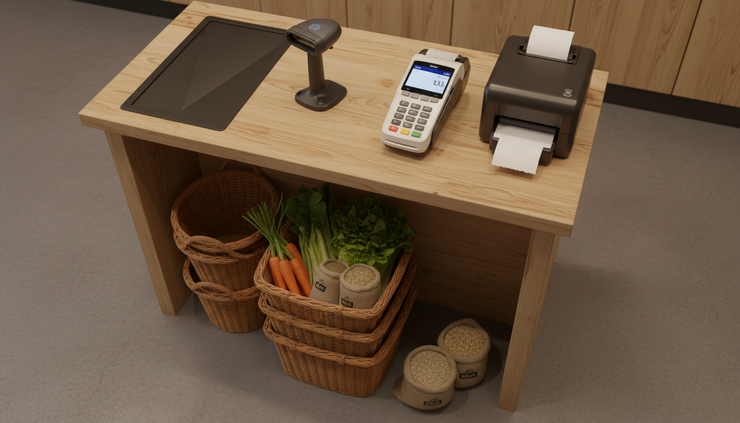
Checkout is another area where AI can make a visible difference. Self-checkout is familiar, but smaller stores can use lighter forms of automation without rebuilding the whole front end. AI-assisted point-of-sale systems can recommend add-on items based on the cart, spot unusual transactions that may need a manager review, and help new employees find items without memorizing every code. Computer vision can support loss prevention by detecting scanning mistakes or unscanned items, though stores should use these tools with care and clear policies. Customers want speed, but they also want fairness and respect. The best checkout technology reduces waiting and confusion without making honest shoppers feel watched or accused.
AI also helps with planning beyond the register. Sales forecasts can guide staffing, purchasing, and promotions by looking at patterns that are easy to miss manually. A local sporting goods shop may sell more rain gear before storms, while a pet supply store may see steady repeat purchases that can support subscription reminders. A boutique may need better size-level forecasting rather than broad category reports. AI can analyze these patterns and suggest what to buy, when to discount, and when to hold inventory back. For small and mid-size retail, this can be the difference between tying up cash in slow-moving products and having the right items available when customers are ready to buy.
Smaller retailers should start with focused use cases
The common mistake is trying to “add AI” as a broad project. That approach is too vague and often too expensive. A better path is to choose one high-friction problem and connect it to a measurable business result. If stockouts are the pain point, start with inventory alerts or shelf scanning. If labor pressure is the issue, start with task automation, scheduling support, or self-service tools for common customer questions. If margins are tight, start with demand forecasting and markdown guidance. The project should be small enough to test in one location, one department, or one workflow before spreading it across the business.
Cost also matters. Small and mid-size retailers should look for tools that work with systems they already use, such as their POS, e-commerce platform, inventory software, or accounting system. A shiny robot that cannot connect to store data may become an expensive novelty. A modest AI tool that improves ordering accuracy may pay for itself much faster. Owners should ask vendors direct questions: What data does the system need? How long does setup take? Who trains the staff? What happens if the internet goes down? Can the retailer export its data later? Clear answers matter more than flashy demos. Good AI should make operations simpler, not lock the business into a tool it cannot control.

The takeaway for modern retail
AI and robotics will not make every small retailer look like a national chain, and that is a good thing. The real value is not in copying big-box technology for its own sake. The value is in giving smaller teams better information, fewer repetitive tasks, and more time for service, merchandising, and local decision-making. A store that knows what is on the shelf, what is running low, what customers are asking for, and where staff time is being wasted can respond faster and operate with more confidence. The smartest next step is simple: pick one problem that costs time, sales, or customer trust, then test an AI or automation tool that addresses it directly. Small improvements, repeated across inventory, checkout, planning, and service, can create a stronger retail operation without losing the human touch that customers still remember.


Comments